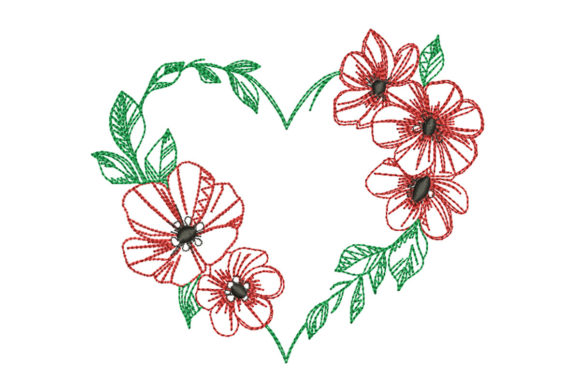
Wildflower Wreath: A Thoughtful Designer’s Review
As a designer who’s stitched hundreds of floral motifs—from delicate baby onesies to bold boutique tote bags—I opened the Wildflower Wreath embroidery file with quiet curiosity. Not hype, not urgency—just the kind of grounded attention you give a tool before trusting it in front of a client or launching it on your Etsy shop. This isn’t just another floral wreath. It’s a mood, a rhythm, and a practical design decision waiting to be tested.
First Impressions: Softness with Structure
The Wildflower Wreath lands gently—not fussy, not stiff. Its shape is circular but relaxed, like flowers gathered by hand rather than arranged by algorithm. There’s variation in petal size, subtle asymmetry in stem placement, and breathing room between blooms. That matters. Too-tight wreaths flatten into a solid disc under satin stitch; too-loose ones lose cohesion on curved surfaces like caps or pillow covers. This one strikes balance: organic enough for handmade authenticity, intentional enough for commercial embroidery clarity.
I pictured it instantly on a linen tea towel—soft thread, medium-density fill stitch, no appliqué needed. Also on a lightweight cotton baby romper, where over-stitching would feel heavy. The design doesn’t scream “wedding” or “birthday”—it whispers “thoughtful,” which makes it unusually versatile across seasons and customer types.
Real-World Use: Where It Shines (and Where to Pause)
Last week, I prepped a custom order: embroidered canvas tote bags for a local florist’s pop-up. I tried Wildflower Wreath centered on the front panel—3.5" wide, medium hoop. Result? Clean lines, no thread nesting, and a warmth that elevated the plain fabric without competing with the brand’s handwritten logo nearby. Customers paused to touch it. That’s the handmade product effect: tactile, considered, quietly confident.
It also translated well onto a brushed cotton sweatshirt—but only with light tear-away stabilizer and reduced top tension. On denser fabrics like wool-blend jackets or raincoats, I’d suggest testing stitch density first. Dense fill areas (like clustered centers) can pucker if the design wasn’t digitized with fabric memory in mind—and since the product description mentions outerwear and suits, I’d verify that the file includes optimized underlay and stop-points for dense zones.
For baby embroidery? Yes—but avoid tight corners (like near shoulder seams) unless you confirm small details hold up at 2.75". Tiny buds or thin stems may vanish on stretchy knits or low-thread-count muslin without proper cutaway stabilizer. And on dark fabric? Test contrast early. Some wildflower palettes rely on light-on-dark subtlety; others need brighter thread colors to read clearly in natural light—especially on holiday embroidery like kitchen towels or nursery decor.
What It Adds to Your Craft Business
As an Etsy seller and small shop product developer, I judge designs not just by beauty, but by how they affect buyer trust and perceived value. Wildflower Wreath reads as professional, not generic. That distinction matters when pricing personalized gifts or boutique branding. A customer paying $48 for an embroidered apron notices the difference between a stock wreath and one that feels *placed*, not pasted.
It also works well in printable mockups—clean edges, balanced negative space, and no micro-details that blur at thumbnail size. That’s critical for digital embroidery file listings where buyers preview before purchasing. And for craft fair products? It scales gracefully: same file, resized for a cap front (with adjusted stitch count) or enlarged for a pillow cover—no redrawn elements needed.
Design Notes Every Embroiderer Should Check
- Test on scrap fabric first—especially if using textured weaves (like burlap blends) or lightweight rayon, where fill stitch can sink or distort.
- Review thread color contrast across light and dark backgrounds. What reads as soft lavender on ivory may disappear on navy without adjusting hue or saturation.
- Confirm hoop size compatibility. If you’re working with smaller hoops (4x4"), check whether the full wreath fits—or if it’s meant to be used as a quarter-repeat or border element.
- Inspect small details: Are stamens crisp? Do thin stems hold at slow speeds? Run a black-and-white mockup to spot muddy transitions.
- Stabilizer choice matters. For t-shirts or knits: cutaway + topping. For structured blouses or coats: medium-weight tear-away with optional film topping for sheen control.
- Licensing clarity is non-negotiable. Since this is marketed for commercial embroidery and apparel use, verify whether the purchase includes small business rights—or if resale of finished products requires additional permissions.
Final Thought: A Design That Serves the Maker
Wildflower Wreath doesn’t try to be everything. It’s not a maximalist statement piece, nor is it minimalist to the point of emptiness. It’s a quiet collaborator—supporting your vision instead of dominating it. Whether you’re stitching a wedding gift, building a cohesive line of embroidered kitchen textiles, or sourcing reliable design assets for your craft business, this wreath earns its place not through flash, but through thoughtful execution.
That’s the mark of a strong machine embroidery design: it looks better after stitching than on screen, holds up to wear and washing, and still feels personal—even at scale. If your next project calls for something gentle but grounded, seasonal but timeless, decorative but never distracting, Wildflower Wreath is worth your time, your stabilizer, and your most intentional thread choice.