Flame: A Bold, Versatile Embroidery Design for Craft Fairs
First Impression: Confident, Clean, and Instantly Recognizable
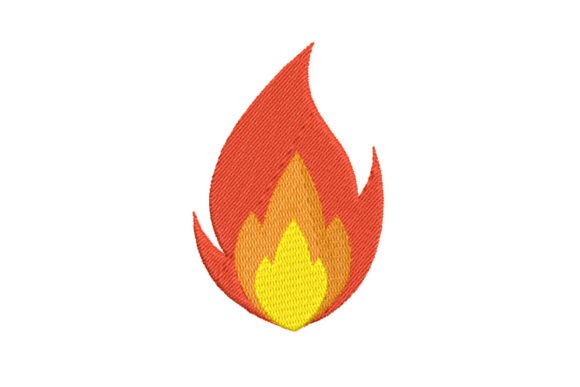
As an embroidery designer who’s prepped over 200 craft fair booths—from snowy holiday markets to sun-drenched summer bazaars—I opened Flame expecting a cliché. Instead, I got clarity. This isn’t a cartoon flicker or a cartoonish fireball. It’s a streamlined, stylized flame with strong directional flow, balanced negative space, and intentional tapering—feeling modern yet timeless, bold but not aggressive. It leans into confidence without shouting, making it equally at home on a farmhouse apron and a sleek black market tote. For buyers scanning a crowded booth in under three seconds, Flame lands as *premium handmade*, not generic clip art.
Where Flame Shines Most—And Where It Needs Care
In my real-world test setup—tote bags, tea towels, embroidered patches, aprons, small fabric pouches, and pillow covers—Flame performed strongest where contrast and context worked together:
- Tote bag design: Centered on natural canvas or oatmeal linen, Flame reads instantly from six feet away. Its vertical energy draws the eye upward, reinforcing the bag’s structure—not fighting it.
- Apron embroidery: Placed just above the pocket (not centered low), it adds personality without overwhelming utility. Works especially well on dark denim or charcoal twill—thread contrast becomes part of the storytelling.
- Embroidered patch: At 2.5"–3", Flame retains crisp edges and legibility. Ideal for sew-on or iron-on use on jackets, caps, or reusable produce bags—small shop product gold.
- Tea towel embroidery: On tightly woven cotton or linen-look towels, Flame pops when stitched with matte cotton thread. Avoid ultra-textured terry—we’ll revisit that in careful-use notes.
What Holds Back Flame—And How to Fix It
Like any strong design, Flame has boundaries. It doesn’t shrink gracefully below 1.75". Tiny inner curves lose definition on dense fabrics, and stitch density climbs noticeably near the tip—so avoid cramming it onto curved cap surfaces unless you’re using a high-quality cap frame and lightweight stabilizer. Dark fabric demands high-contrast thread (think neon orange or ivory on navy), and textured towels like waffle-weave require extra stabilizer layers and slower stitch speeds. Also: no tiny lettering or fine linework here—but that’s a strength. Flame is pure shape language. That means fewer surprises during production and faster batch turnaround for your Etsy seller or small shop product line.
Visual Impact in Real Booth & Online Settings
At a craft fair, Flame works hardest when paired intentionally. Hang a set of three tea towels—cream, terracotta, and charcoal—with identical Flame placement. Suddenly, it’s a collection, not a one-off. Place one embroidered patch beside a matching flame-printed sticker and a mini matchbox-shaped gift tag: cross-selling becomes effortless. For printable mockups and Etsy listings, Flame photographs cleanly even in natural window light—no heavy retouching needed. Its symmetry and clean silhouette scale beautifully across thumbnails, banners, and social posts. Buyers recognize it fast, remember it longer, and associate it with intention—not algorithm-chasing.
Production Practicality: Why Flame Saves Time & Builds Trust
This is where Flame earns its keep. As a machine embroidery design, it’s built for repeatability: consistent spacing, predictable hoop size needs, and minimal jump stitches. No nested elements or floating motifs to reposition mid-run. That translates directly to fewer stopped machines, less thread breakage, and tighter batch consistency—critical when embroidering 40+ tote bags the night before a show. Thread colors stay manageable (3–4 max), and because it’s a single motif—not a scene or slogan—it adapts seamlessly across House-category products: pillow covers, market bags, oven mitts, even heat-resistant trivets (with appropriate fabric and thread selection).
Careful-Use Notes Every Embroiderer Should Check
Before cutting your first stabilizer sheet, do this:
- Test Flame on scrap fabric matching your final product—especially if using thick denim, textured toweling, or curved caps.
- Check thread contrast: what reads bold on screen may vanish on black linen or heather gray.
- Review spacing between flame elements—if your file includes layered fills, confirm they don’t overcrowd tight curves.
- Confirm hoop size compatibility with your frame system—some versions may need 4x4, others 5x7.
- Inspect stitch density in the flame’s core; dense areas may require cutaway stabilizer on lightweight fabrics.
- Always use the right stabilizer: tear-away for stable cottons, cutaway for knits or stretchy blends, and heavy cutaway + topping for textured towels.
- Create at least one real mockup—not just a digital preview—before committing to 50 units.
- Compare how Flame looks on light vs. dark fabric swatches side-by-side.
- Verify commercial licensing terms—this digital embroidery file must be cleared for sale as a finished product, not just personal use.
Final Thought: Flame Is More Than a Motif—It’s a Hook
In a sea of florals, quotes, and minimalist lines, Flame stands out by being both specific and open-ended. It speaks to kitchens, safety, energy, passion—even transformation. That duality makes it sticky. Customers pause. They ask questions. They imagine it on *their* favorite apron, *their* market bag, *their* handmade gift. As an embroidery designer building real craft fair inventory, I trust Flame because it delivers visual clarity, production reliability, and emotional resonance—all in one clean, House-category Embroidery file. It doesn’t beg for attention. It earns it.